


Inštitut Egon March: Atmosferska demokracija / Atmospheric Democracy
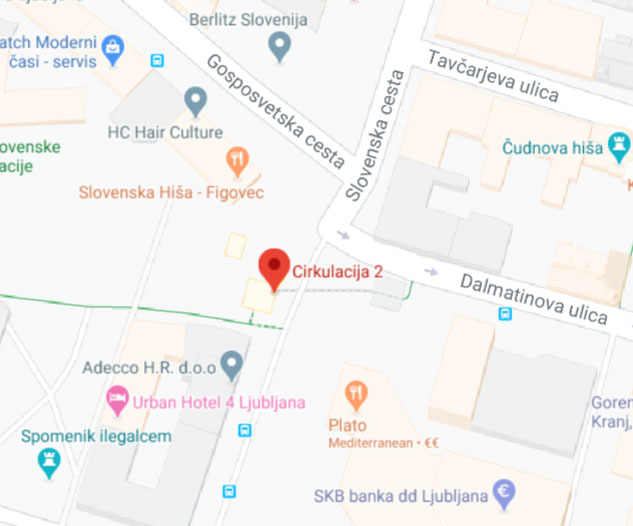
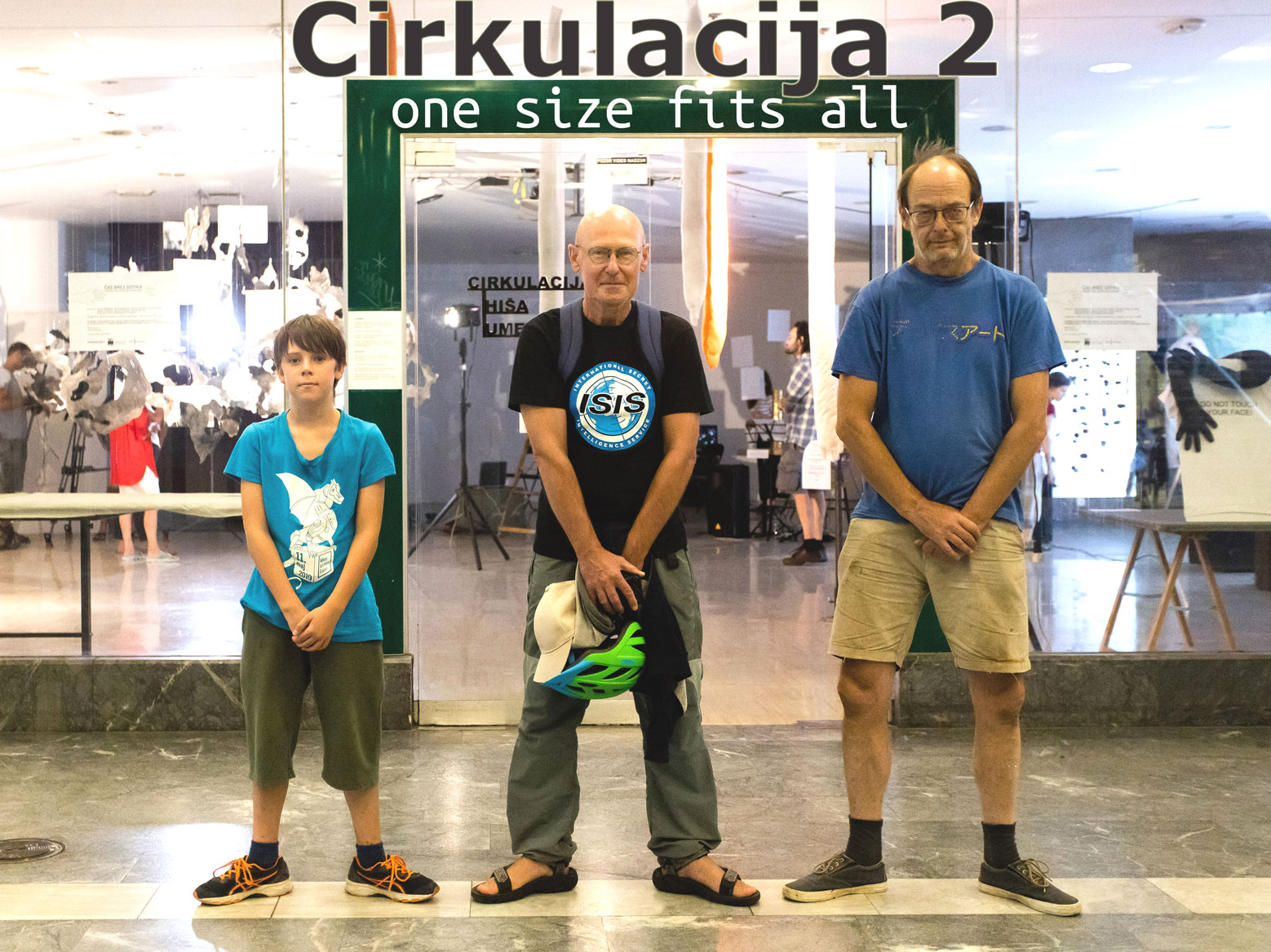
Published on September 19th, 2026Cirkulacija 2, Wednesday September 23, 2026, at 8 p.m., on the autumn equinox:
Tatiana Kocmur (performance, acting) and Tobija Hudnik (electric guitar) support Marko Košnik‘s “lecture,” in the form of a (premiere) screening of a film, with a live performance. In the second part of the event, Dr. Thomas Fuerstner will lecture on an advanced approach to multi-layered atmospheric measurements (MIOTY).
Cirkulacija 2, Thursday September 24, at 7 p.m., Urška Kristina Škerl and Tomo Križnar will lecture on the set topic.
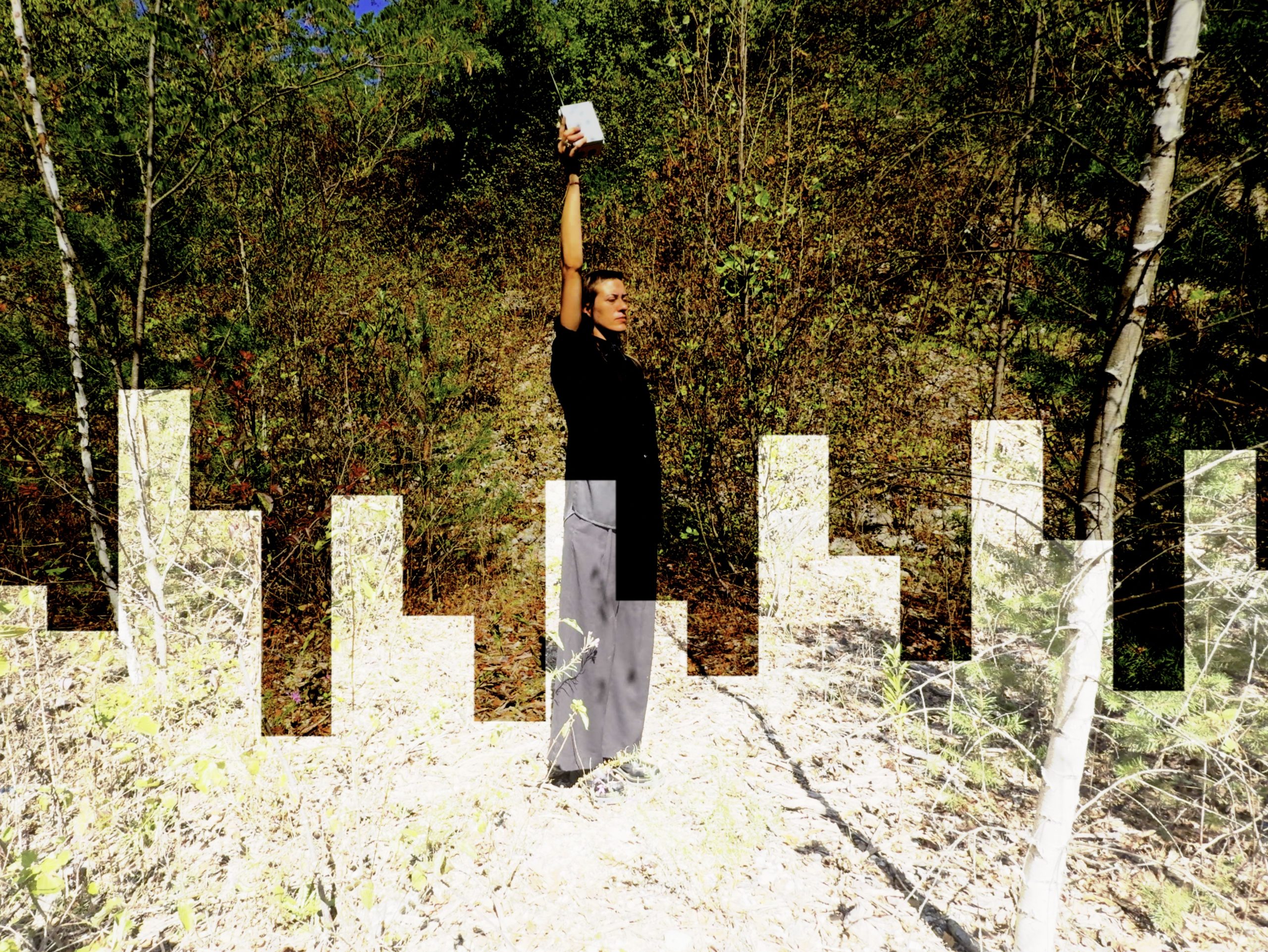
Atmospheric Democracy is an attempt to unite otherwise divided and even conflicting artistic, ideological, media, and technological visions of establishing at least a tolerable, if not more promising, future of a “paradise garden,” as it continues to be promised by various potentates. Whether through expansion at any cost for the benefit of all living beings or through defense and contraction for chosen non-peoples and nations. Among the many movements that, scattered, push in all sorts of directions, across a broad spectrum from ecologists to neo-Nazis, somewhere in the middle, among killings, with AI-guided missiles and drones, a crater (Krater) is being dug, which is not only an ever-deeper wound in the middle of an overheated world but also a concrete space in Ljubljana where the Trajna Association, the project’s co-producer, operates. Over the long hot summer, in the area of an abandoned construction pit, where individuals in their own distinctive ways strive to green and preserve urban wilderness, we were setting up an advanced measurement system that, we hope, will inspire us to confront the chaos of the all-encompassing atmosphere around us.
With the project we are trying to open up possibilities that allow us to bypass failed attempts at direct communication through third-order cybernetics: by understanding one another and the most diverse beings in different parallel systems to enhance insight into that whole which surrounds us all, at least to a certain extent, even if each of us within our own (sub)system. What if we can understand each other better (beyond empirically demonstrable communication) by empathizing with the sphere that determines us on a meta-level, yet in a completely concrete situation, on the spot, where among alien and native species we try to participate in (co)deciding the future of the world? And this will be Atmospheric Democracy, in which, alongside representatives at the United Nations, nettles, mosquitoes, and fruit flies have a say as well. For now, not yet in New York, but at least locally, in the Ljubljana’s Krater.
Contributing authors:
Urška Kristina Škerl (1989) is a landscape architect, artist, writer, and editor of the international online platform for landscape architecture Landezine, and director of the multimedia institute Egon March Institute, with which she has carried out several projects and exhibitions. She develops independent practice and theory through art projects, installations, lectures, in collaboration on architectural competitions, and with numerous self-organized collectives (Krater).
Tatiana Kocmur (1992) is a visual artist, performer, and producer of contemporary art. She represents the Cirkulacija 2 association, is a co-creator of the platform for performative arts TRANSLACIJA/TRASLACIÓN, and a member of the queer collective Bottoms. She has presented her works in numerous domestic and international productions and festivals.
Tobija Hudnik (1999) is an instrumentalist and composer. He regularly performs at festivals throughout Europe and teaches composition and improvisation at the Jazz Institute in Berlin. His most acclaimed premieres and performances in recent years have been with the ensemble unidad.salgan. As an arranger and composer, he has collaborated with the Royal Concertgebouw in Amsterdam, and as a guitarist with, among others, James Morrison, Volker Schlott, and Tonč Feinig. He has received several awards, including first prize at the TEMSIG competition and the award of the Jazz Institute in Berlin.
Tomo Križnar (1954) is the author of six books and six documentary films shot by his own hand, directed in collaboration with Maja Weiss, with numerous awards at world festivals, and with a seventh film just before its premiere. With the new documentary he will present the history of the development and decline of indigenous groups in the Nuba Mountains from his first visit in 1987 to the present day. For the besieged and sealed-off war zones in the Nuba Mountains and Blue Nile province in South Sudan, together with his wife Bojana and supporters, he advocates the establishment of transnational natural cultural habitats to help indigenous inhabitants, which will enable them to avoid refugee camps and remain on the tribal territories of their ancestors.
Tom Fuerstner (1963) is an Austrian economist, university professor, and systems architect working in the fields of digitalization, cryptography, finance, and decentralized energy systems. He taught at the University of Applied Arts in Vienna and at ZKM (Zentrum für Kunst und Medientechnologie), where he also served as creative director. Today he combines in-depth knowledge of cryptographic primitives, crypto hardware, and RF protocols with his background in economics to design new models for crypto-token-based financial products and real-world energy infrastructure.
Marko Košnik (1961) founded the Egon March Institute in 1986 as a platform for research in poly-media art with horizontal collaboration among authors from different fields. He appears in various artistic roles and is responsible for organization, conceptual and theoretical support, and archiving of projects. In this way, with EMI, he has realized 78 group and solo productions, 28 of them international, with over thirty international collaborators, in sixteen countries on the European continent and in Mexico, Japan, Indonesia, and the Philippines.
With Atmospheric Democracy we celebrate the fortieth anniversary of the work of the Egon March Institute, the producer of the project.
Co-production: Trajna Association
Executive organizer: Cirkulacija 2
The project was created with the support of MOL – Department of Culture.
We would like to thank all the individuals from the Trajna and Cirkulacija 2 collectives who supported us and helped realize the project during the exceptionally complex and time-consuming preparations.