
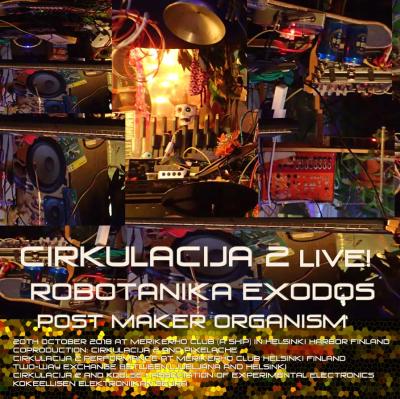

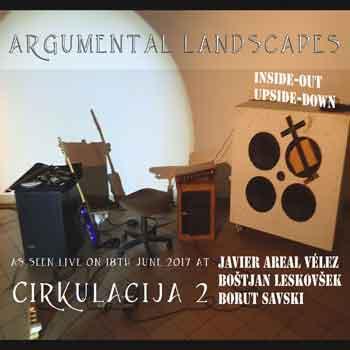
Skupni imenovalec | Common denominator / preliminaries for the exhibition
Naslov razstave: Skupni Imenovalec (english: Common denominator), skupinska samoorganizirana razstava
Avtorji razstave: Alen Ožbolt, Ksenija Čerče, Dejan Knez, Tatiana Kocmur, Francisco Tomsich, NAME, Urška Savič, Tilen Kurent, Damián Vega Velasco, Nina Pivk, Cirkulacija 2
Termin razstave: 19. do 31. maj 2022
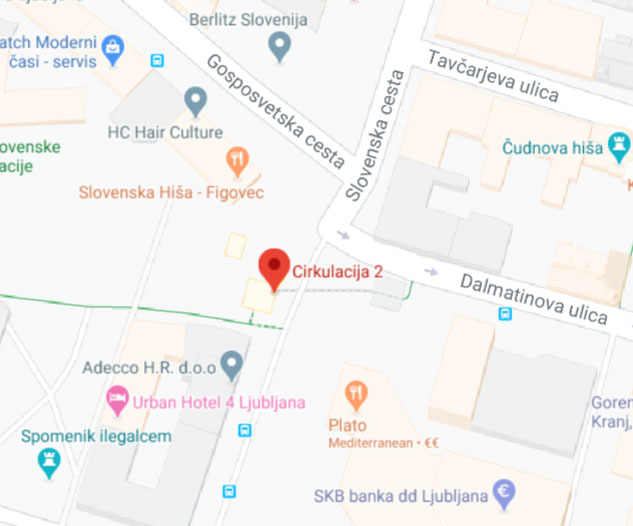
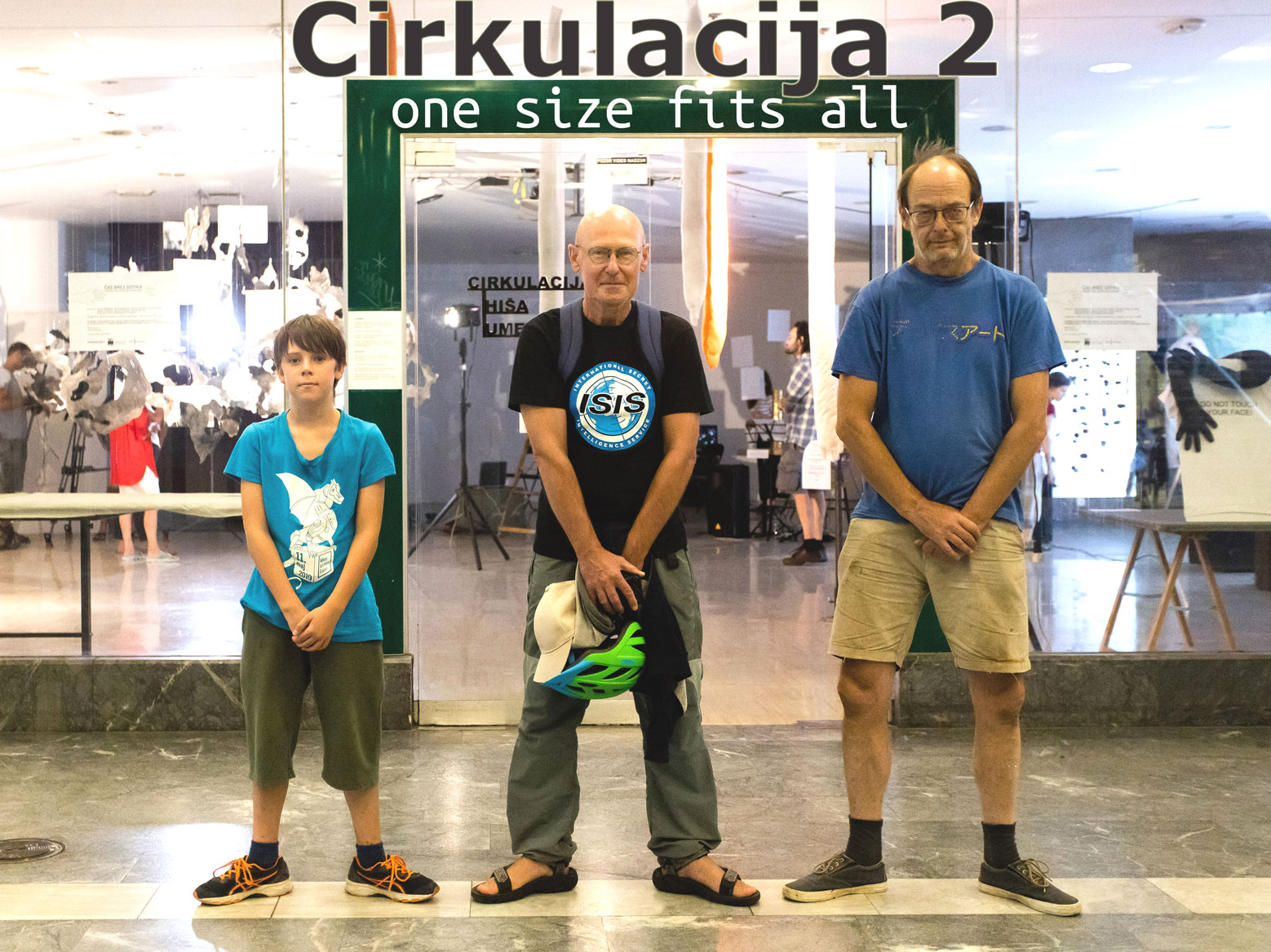
Prizorišče: Cirkulacija 2, Podhod Ajdovščina 2, Ljubljana
Kratek opis:
Skupni imenovalec je tisto kar je skupno vsem razstavljalcem – začasni prostor množine mikro-poskusov samoorganiziranj – raziskovanj in ustvarjanj alternativnih skupnih praks. Ki se morajo nadaljevati. Pri tej razstavi je skupni imenovalec na simbolni način predstavljen prek umetniških del – slik, risb, instalacij, videov, fotografij,… Dela so v materialih, tematikah ali osebno historično nabita z izkušnjo in/ ali spominom na določen čas in prostor, ki so si ga delili sodelujoči umetniki.
Kosi:
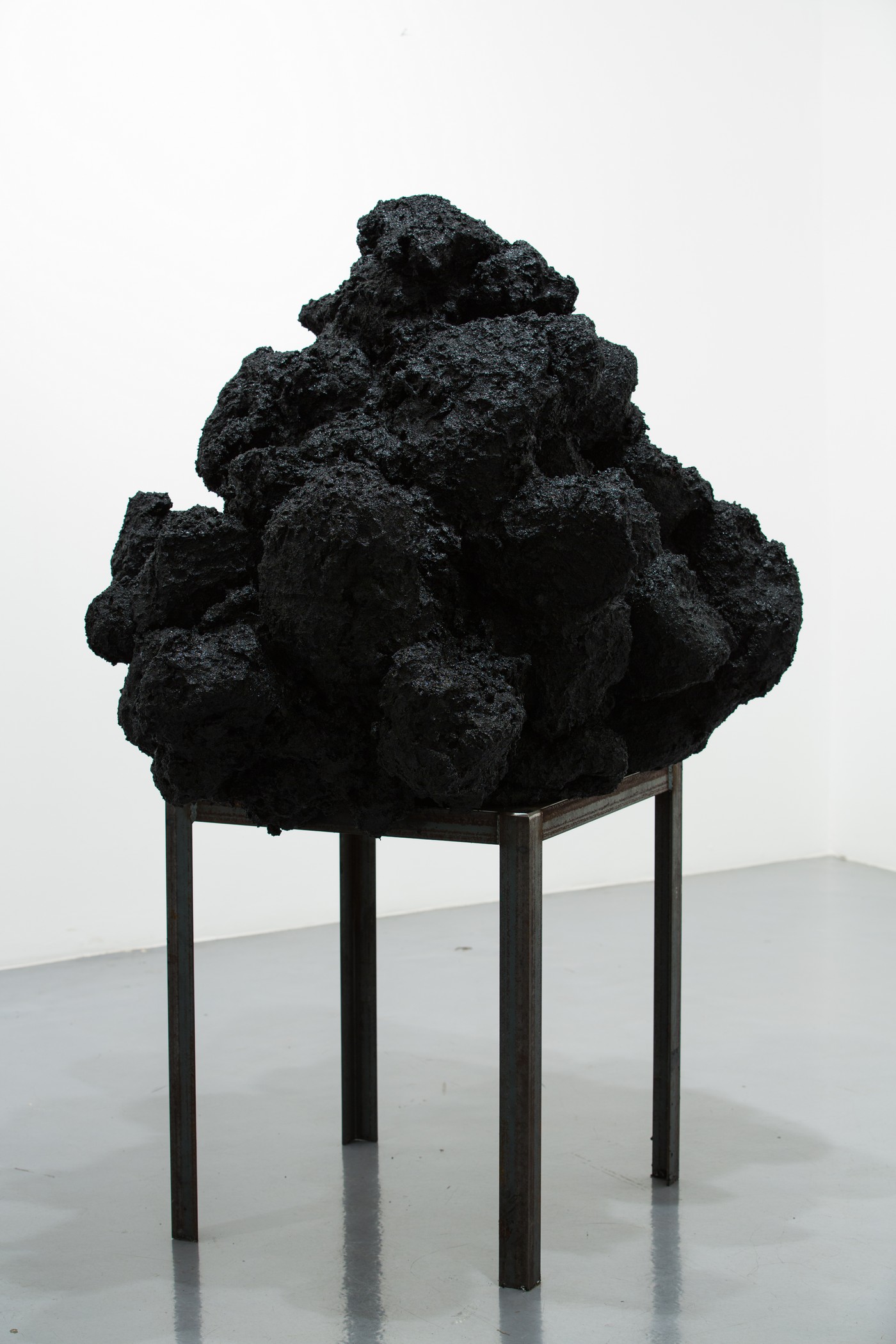 Alen Ožbolt
Življenje oblike – smrt oblike III., 2014
The Life of Form – The Dead of Form III., 2014
poliuretan, bitumen, asfalt, kovinski podstavek
»Vie des formes / Življenje oblik«
Pri nastanku dela »Vie des formes/Življenje oblik« gre za obdobje več let (pri prvi postavitvi z 42. elementi za časovno obdobje med leti 1998 in 2005). Prvič je delo v tej kompoziciji bilo predstavljeno na razstavi z naslovom »Ljubezen je bojno polje« (skupaj z Žigo Karižem) v Galeriji Škuc, leta 2005. Prva postavitev iz Galerije Škuc je bila kasneje spreminjana glede na galerijsko prostorsko situacijo in prilagojenih prostorskih rešitev in situ. Nazadnje v izpopolnjeni in razširjeni varianti (z 52. elementi) na razstavi »Love is a Battlefield« v Ulrich Museum of Art, Wichita State University, Kansas, ZDA, leta 2006.
Na začetku prejšnjega stoletja je Henri Focillon v svoji izjemni in za današnji čas zelo nenavadni (morda tudi čudaški, nevarni) knjigi, nekakšnem ‘slovarju oblik’ z naslovom Vie des formes/Življenje oblik, popisal mnoge nenavadne značilnosti oblik. Tukaj me posebej zanima »stalno gibanje in princip metamorfoze oblik/e«. Oblika, forma (»form«, »forme« je oblika, vendar tudi model, kalup, formular in organizacija, tudi običaj, dogodek; »to form« oblikovati, tvoriti (se); sestaviti; izmisliti si; nasta(ja)ti, razvi(ja)ti se; vzgojiti, vzgajati; pridobi(va)ti; v vrsto (se) postaviti; organizirati, itd.) je namreč zelo kompleksen pojav, da s pomočjo Focilliona govorimo o dinamični, gibljivi torej vedno nestatični, nezmrznjeni obliki. Vsaka oblika ima tudi svojo preteklost, spomin, preteklo obliko, ki se vpiše v vsaki novi, aktualni obliki.
Ksenija Čerče
audio-video installation
A sound-video work from 2010 is from the time when I was still a member of Cirkulacija 2. Primarily the work is a sound piece. Delineating on one hand the sound image I made – and on the other hand (with noise like video-editing), documenting one of our social/noise/eating events (Cirkulacija 2: Concourse = Discourse at Alkatraz gallery Ljubljana 2010) . Placing the work in space is open to dialogue. An unconventional projection (via beamer) and the use of one or a set of monster speakers is desired on site.
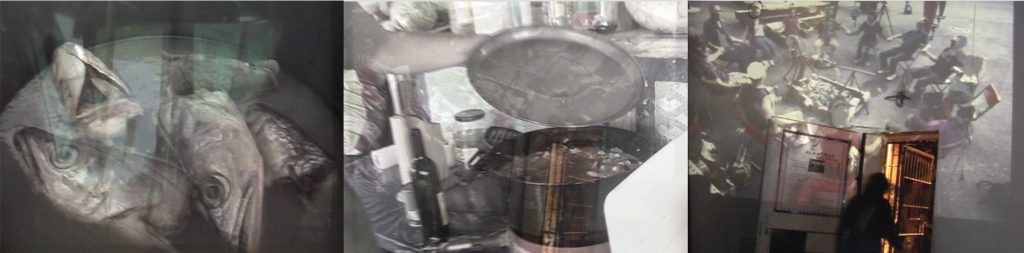
Appearing in the video are works from participants: bridA (Sendi Mango, Tom Kerševan, Jurij Pavlica), Stefan Doepner, Ksenija Čerče, Borut Savski, Reni Hofmueller, Neven Korda, Maja Smrekar, Marko Košnik, Boštjan Leskovšek _ and others.
Francisco Tomsich
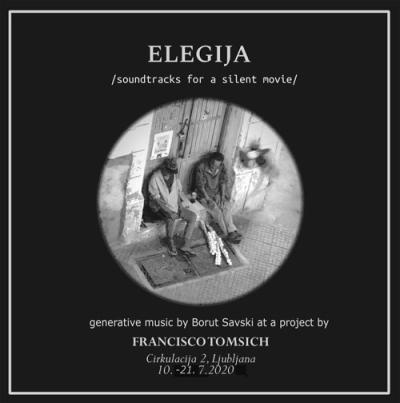
From my part, I am working in a series of silent, single-channel and monochrome series of video artworks called “This is the place” done to be exhibited as large-scale projections in walls and ceilings (like in Elegija, https://anticlimacus.wordpress.com/2020/07/11/elegija-opening/).
Depending on how much space will be available, there could be one, two or more projections. The footage manipulated in these works comes from my own huge archive of videos made in Rog along many years which document different aspects of Rog’s working atmosphere and history.
NAME – Hiša številka 3 / The Old House at No 3
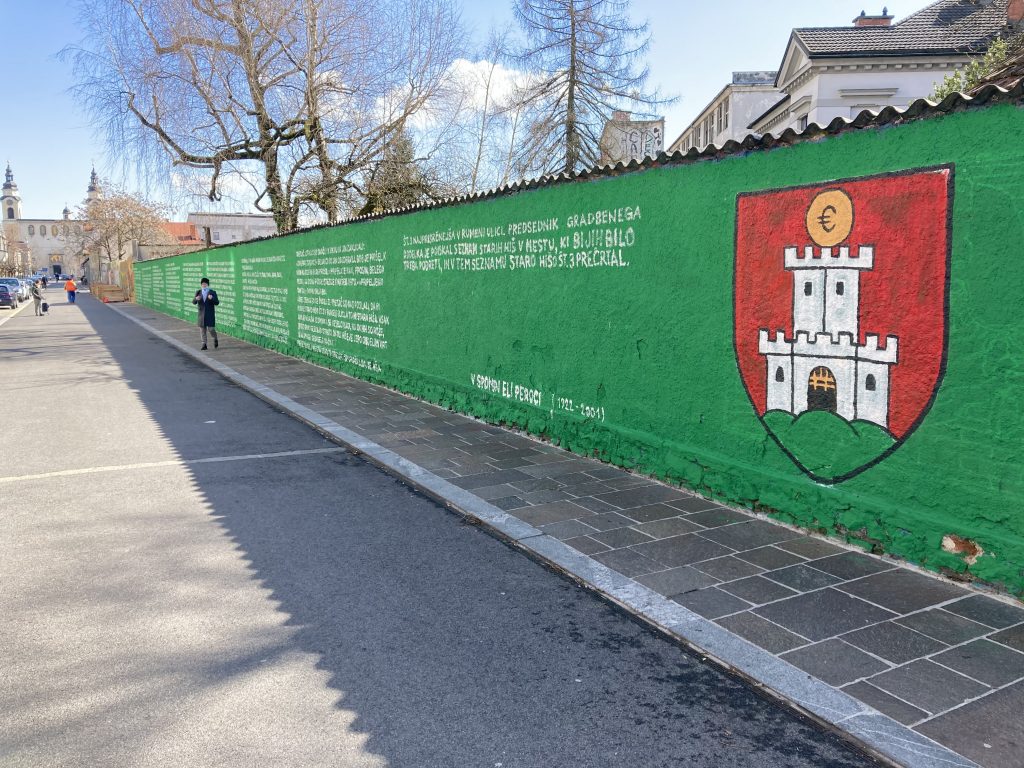
Our city grows prettier each day. They have mended the roads, created parks, and in the parks, placed benches for the oldies and swings for children. They have built many new houses, repainted others, and decided to knock down old houses.
There is such an old house in Yellow Street. People had to move out recently, leaving it empty and quiet. It smelled of soil, and there was no hope that people would ever inhabit it again.
…
They returned to the city council and notified the officials for the third time about the house at No 3 being the loveliest house in Yellow Street. The Head of the construction department took thelist of old houses in the city designated to be demolished and crossed out the old house at No 3 from the list.
Ela Peroci, 1973
Nina Pivk
Manjša kvadratna: (MANJKA FOTO)
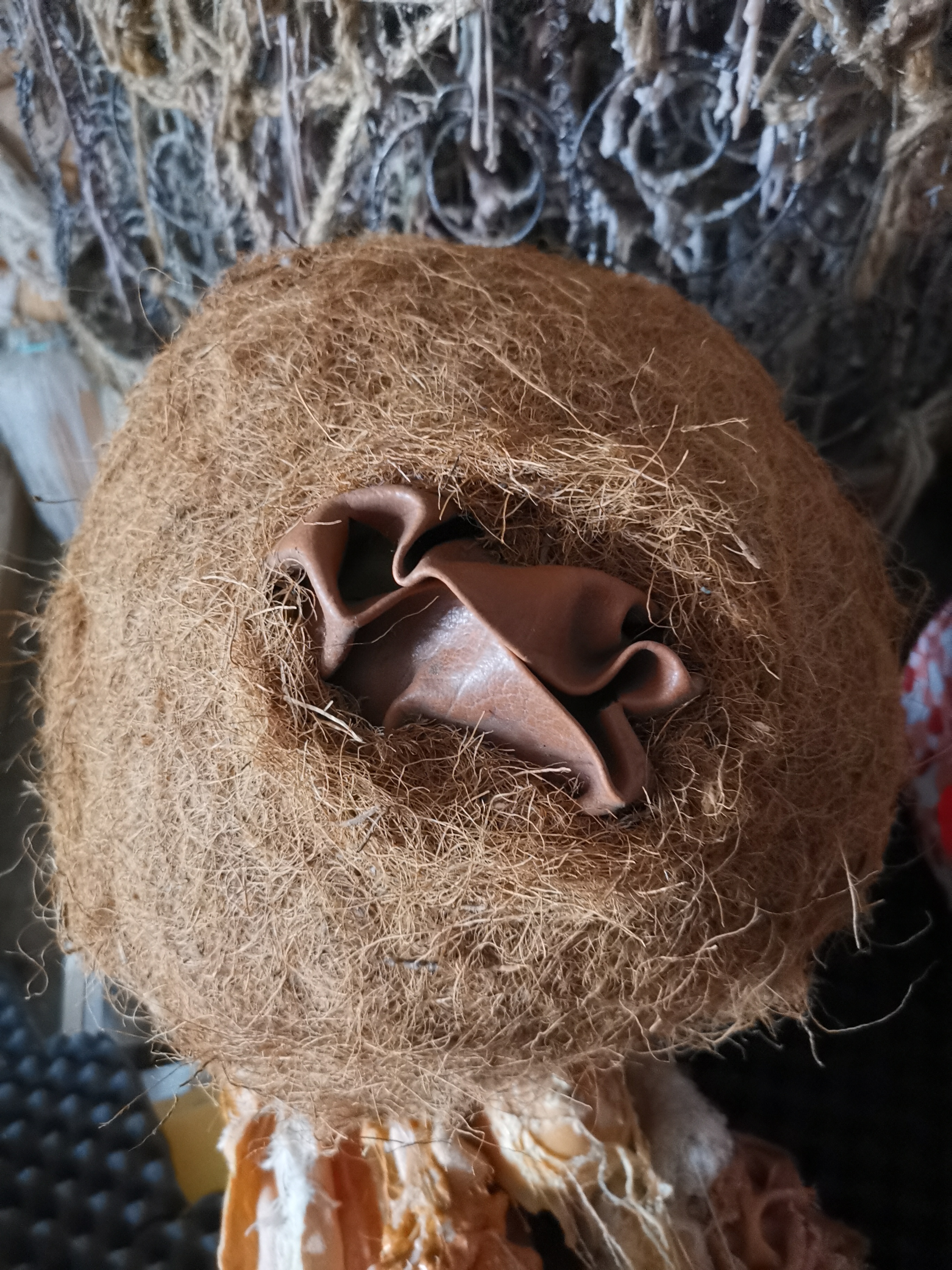
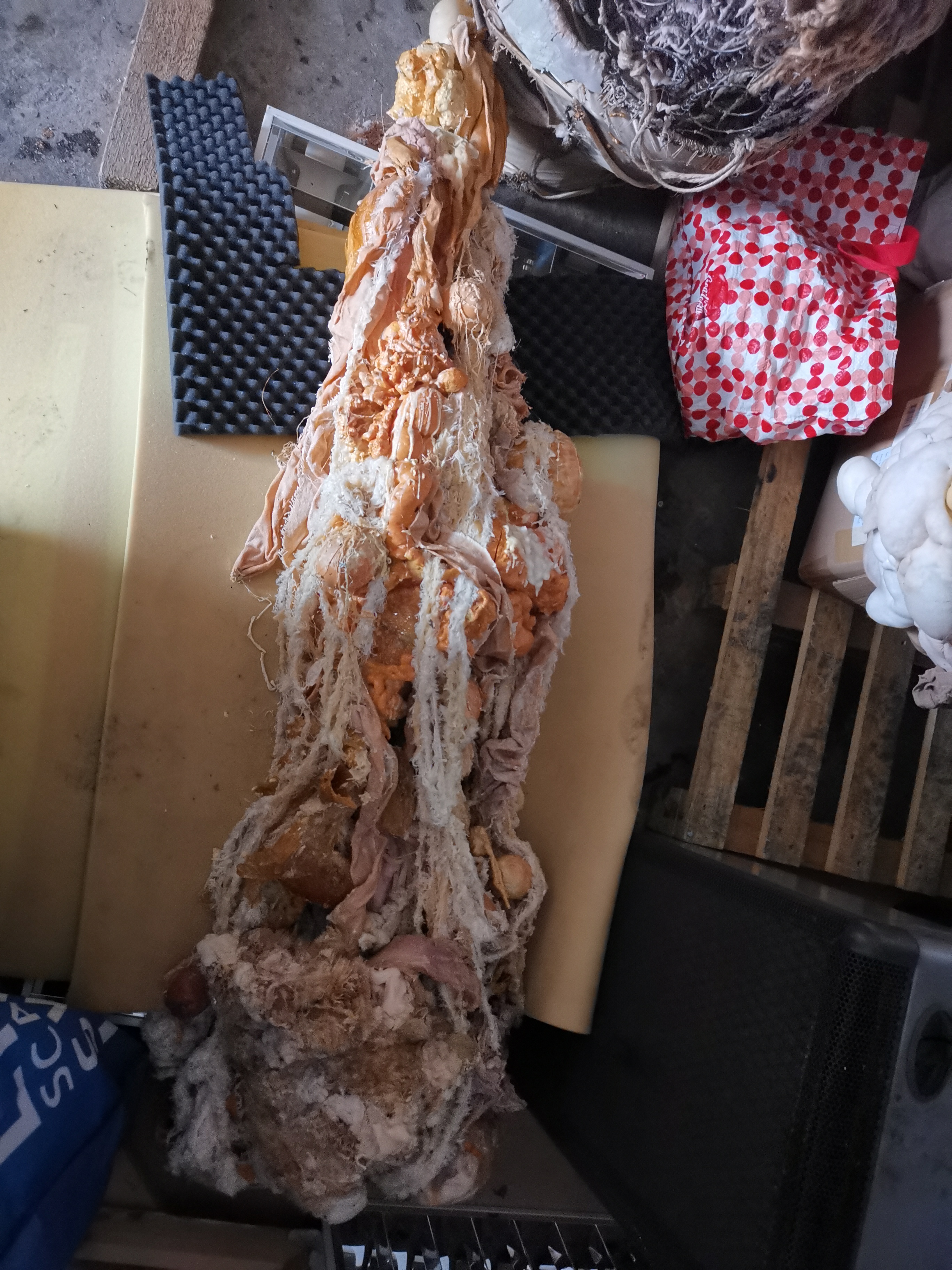
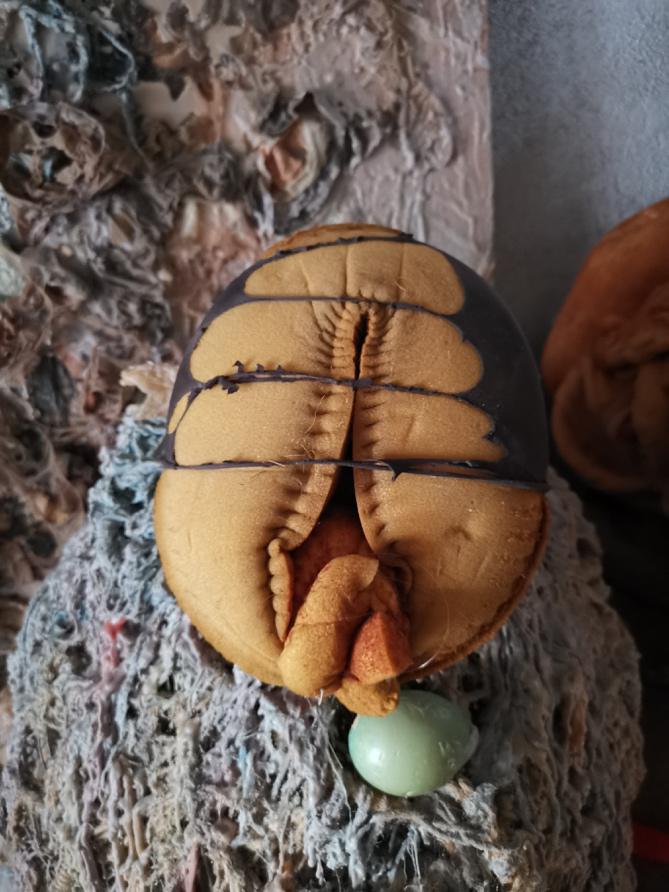
UŽITEK V KVADRATU, 2014, kokosova vlakna, parafin
UŽITEK V ELIPSI, 2015, pena, tekstil.
MOJA ZA VEDNO, 2016, kokosova vlakna, pena, tekstil.
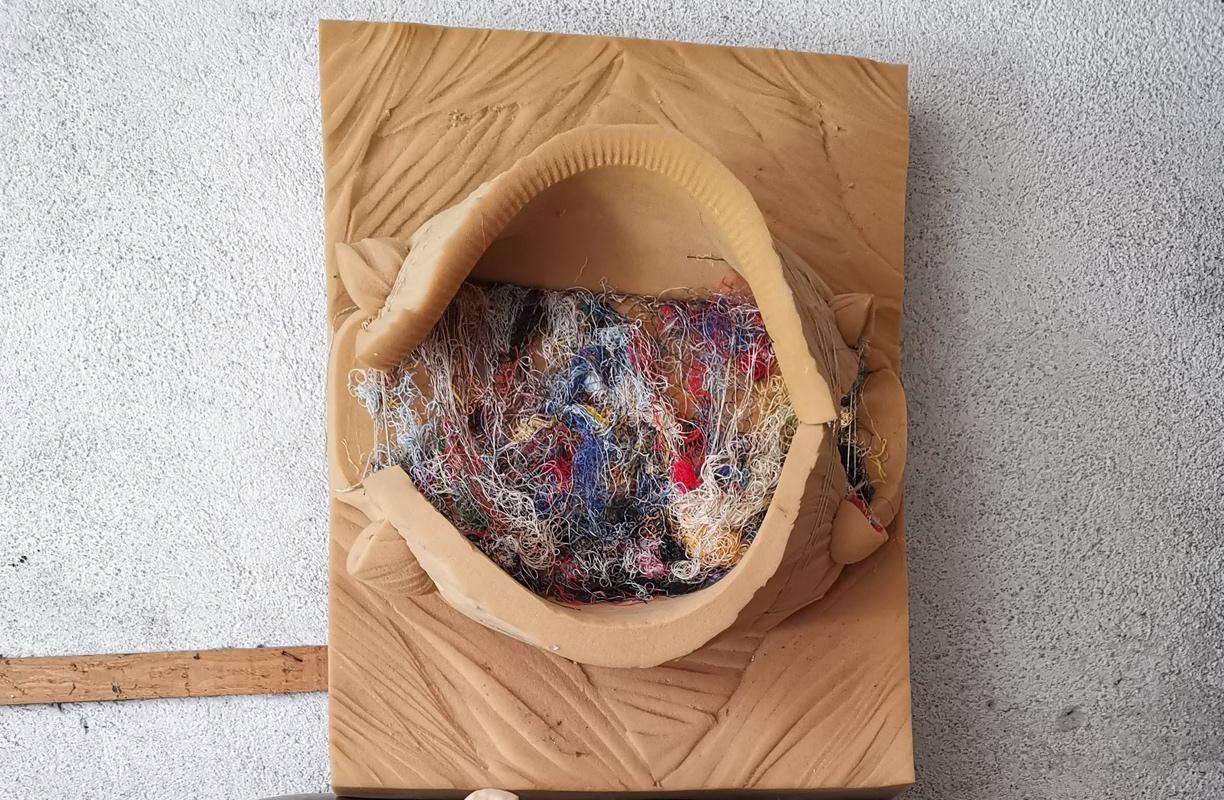
MEHKO ZIJALO, 2014, pena, niti, vrv.
PLIŠASTI FALUS, 2014, poliuretanska pena, blago, parafin, lateks.
Tatiana Kocmur
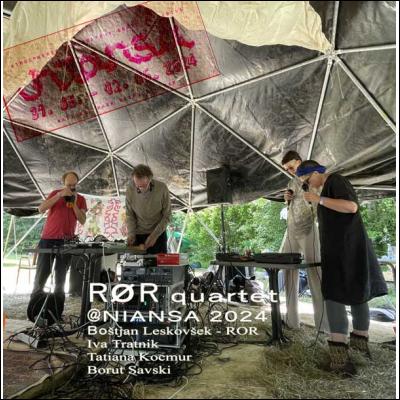
My proposal is a soundscape consisting of a sound recording of La Fabrica Illuminata that was played from the roof of the factory Rog and streamed on Radio Student at the festival Ana desetnica hosted in Rog in 2016.
The song was written by Luigi Nono in 1964. In a sixteen-minute song, a female voice sings fragments of lyrics by two Italian writers, Giuliano Scabie and Cesare Pavese, through tape recordings of an industrial plant in Genoa. At the time, the song criticized working conditions in Italy and the functioning of political power, and was immediately censored by national radio.
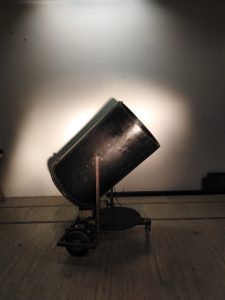
At the exhibition, the sound recording will be played through Stefan’s wheeled black barrel with loudspeaker that will circulate around the space of Cirkulacija 2. The soundscape will evoke the memory of a past event of creatively preventing the attempt to evict the factory by Mol.
 Damián Vega Velasco
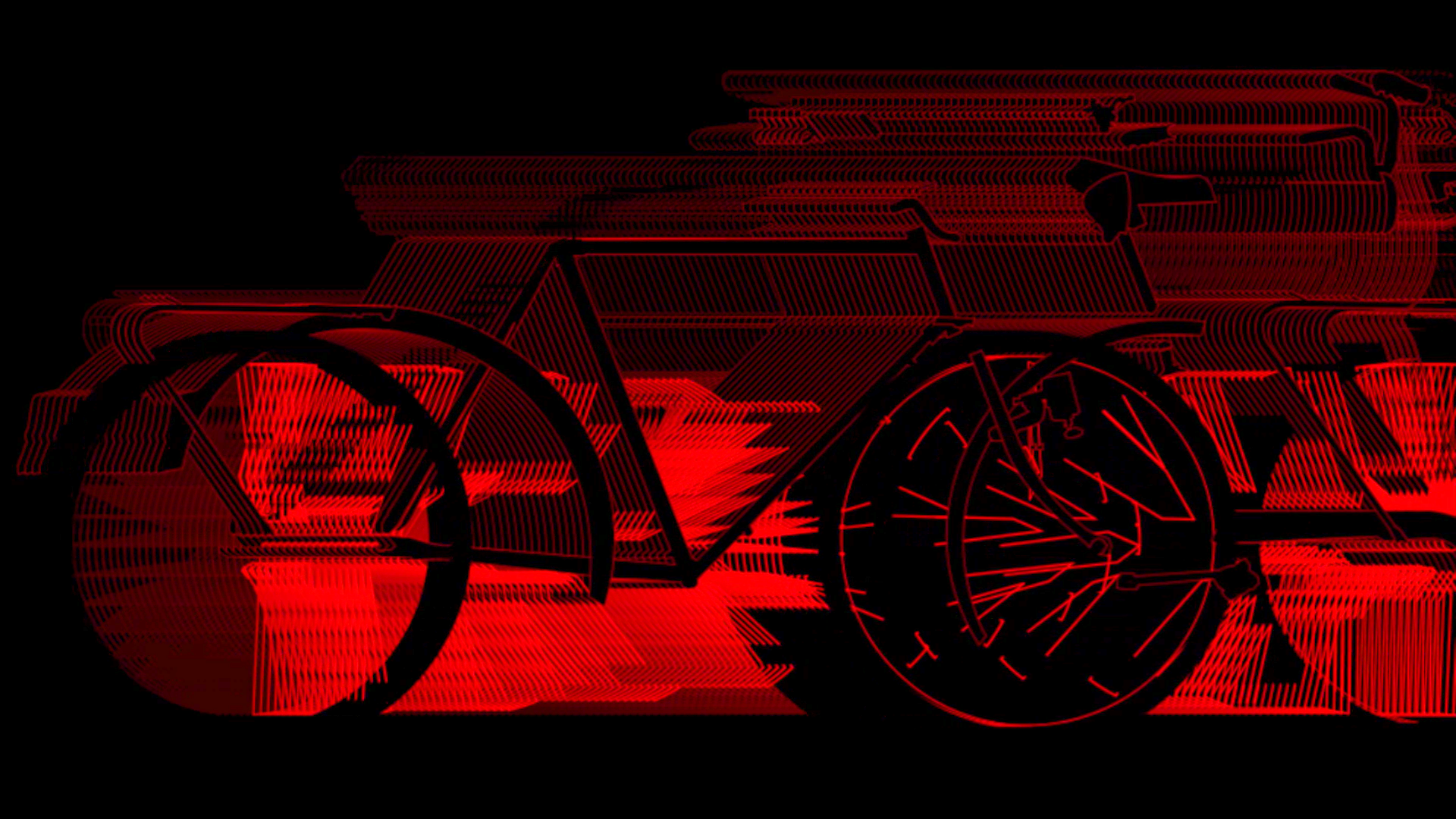
My proposal is a 5-10 minutes loop video and sound. Generative animations from manual and digital drawings from my time in Rog (2015-2016) run through “rhombus” an algorithm I began to write at my studio in Rog at that time.
Sound will be an original piece of electronic music also inspired by sketches from that time.
The piece is suitable for projection to wall and monitor speakers / decent quality headphones, in ideal circumstances.
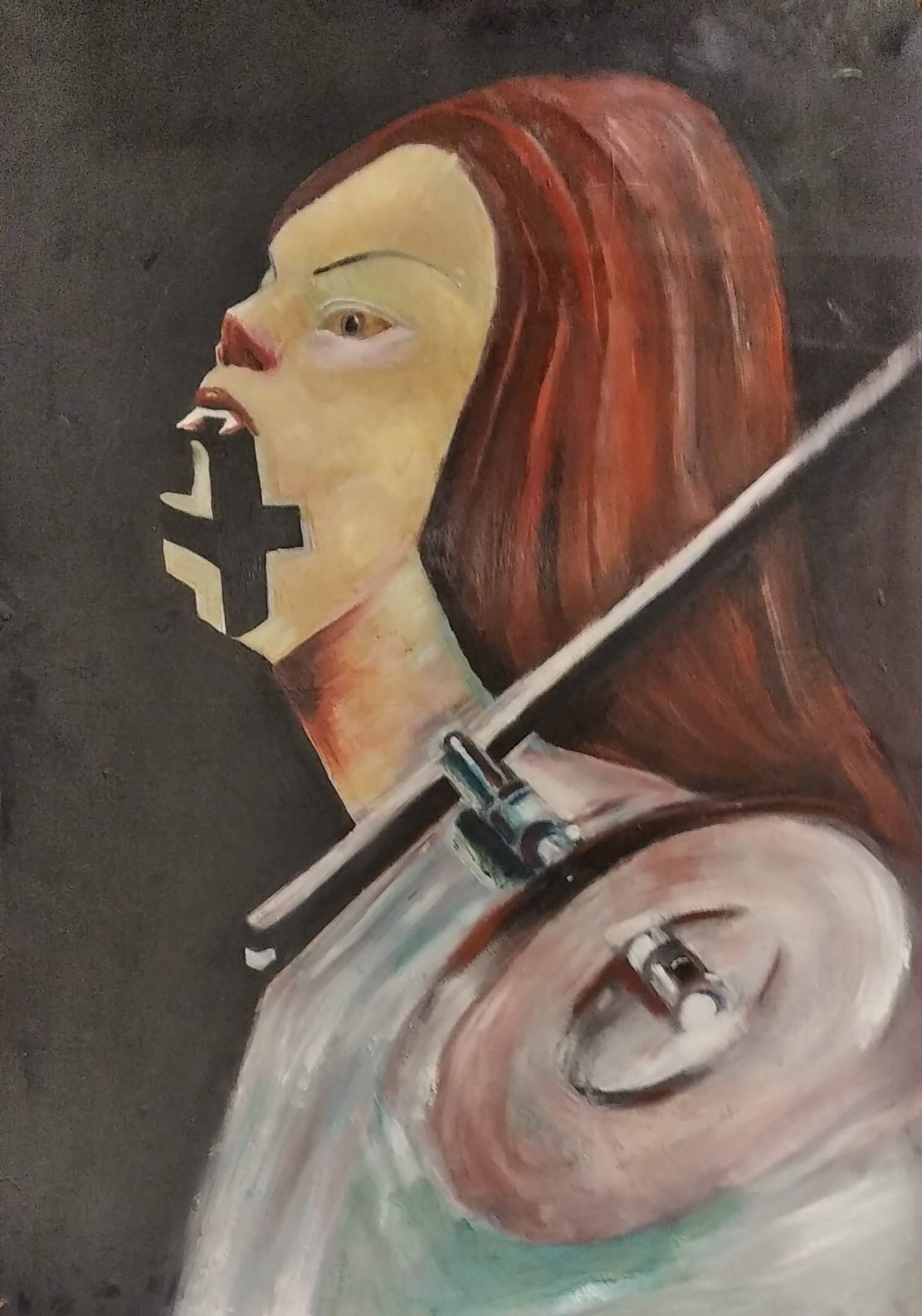 Dejan Knez – Vampirela
Painting on cardboard 70 x 100 cm, cca 2007
Dejan Knez is a Slovenian artist, musician, painter and founder and former member of the group Laibach. He is the son of the Slovenian painter Janez Knez. In 1978, he formed the band Salte Morale, which would later evolve into Laibach in 1980. Soon after, Knez formed the side project 300.000 V.K. with the latest album to be issued any minute now. He was a long-time inhabitant of Rog. The painting is a survival from the fire at Rog in 2007.
Urška Savič
Tilen Kurent
Cirkulacija 2
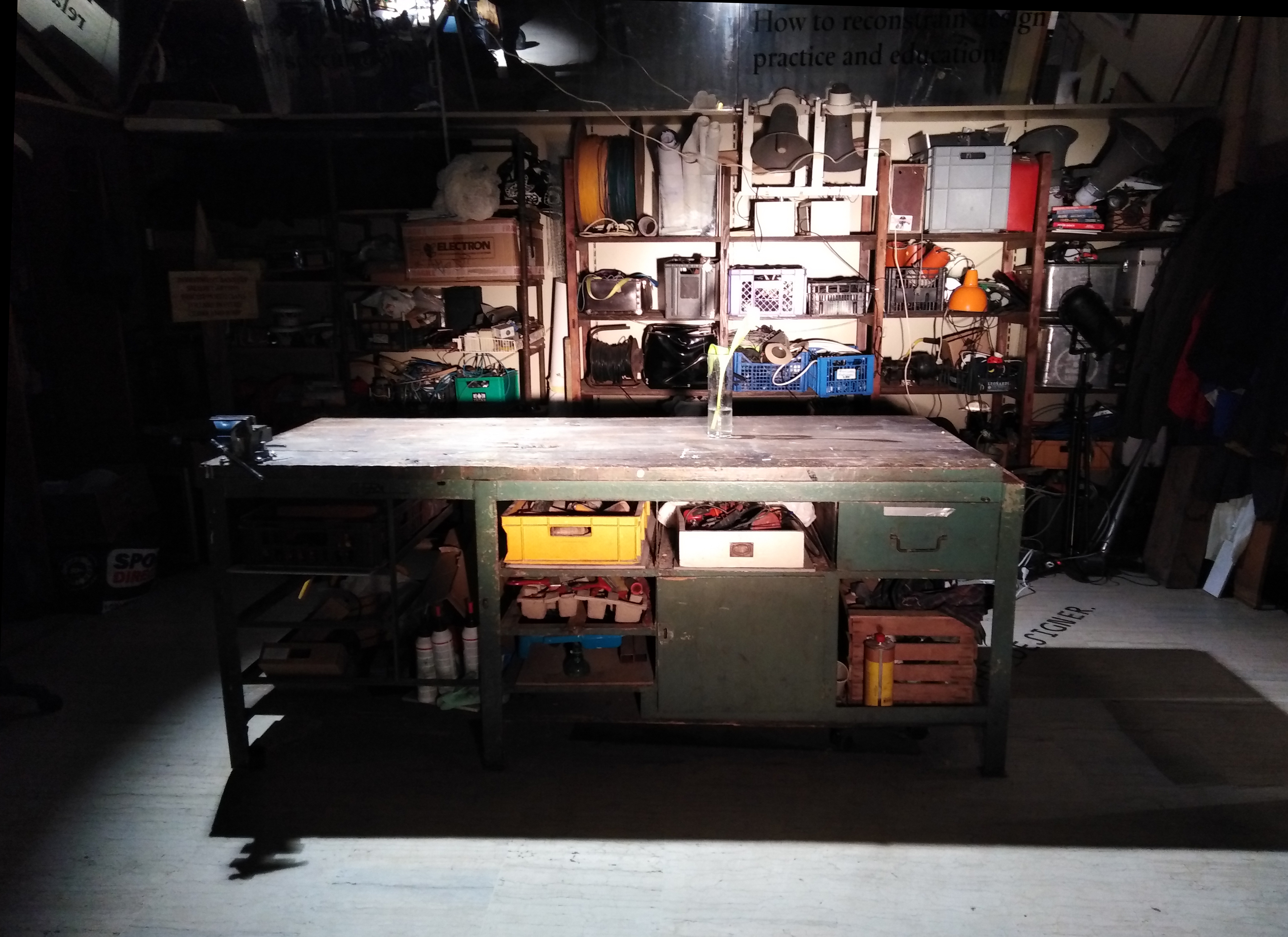
will present various artefacts from their era (2007-2012). Plus some works that reflect the collaborative approach and then/ today socio-political reality from the artists’ perspective.